Clear and Bright
Overview
Clear and Bright, is the 5th solar term in the traditional Chinese solar calendar, marking a significant period that combines meteorological changes, traditional customs, and cultural practices. It encapsulates a critical phase for agricultural activities as temperatures rise and rainfall increases. This solar term is distinctively notable for coinciding with the Qingming Festival, also known as Tomb-Sweeping Day, a time for honoring ancestors and enjoying the rejuvenation of spring.
Cultural Significance and Traditions
Clear and Bright, as a solar term and festival, traces its history back to the Zhou Dynasty (c.11th century-256BC). It has been depicted in various art forms, including paintings and poetry, most notably in the poem "Qingming" by the Tang Dynasty (618-907) poet Du Mu. This connection to both artistic expression and agricultural guidance highlights its dual role in Chinese culture as both a practical and a spiritual observance.
Worshiping Ancestors
During this period, the Chinese people partake in the traditional practice of ancestor worship, a ritual deeply rooted in the nation's history. This involves visiting ancestral tombs, cleaning them, and making offerings such as the deceased's favorite foods, wine, chopsticks, and paper money. These offerings are burned with the belief that they will provide the deceased with necessities in the afterlife. The practice underscores a profound respect for ancestry and is considered a time for reflection and remembrance.
Willow Branches
An interesting custom associated with Clear and Bright is the wearing or displaying of willow branches. Legend has it that this period is one when spirits come close to the living, and Buddhists believe willow branches can ward off these spirits, hence their nickname "ghost terror wood".
Spring Outings
Clear and Bright is not only a time for somber reflection but also for enjoying the vibrant life of spring. People engage in spring outings to enjoy the greening trees, blossoming flowers, and overall revival of life, promoting physical and mental well-being.
Flying Kites
Kite flying is a popular activity during this period, with a unique twist during Tomb-Sweeping Day. Kites are flown both during the day and night; at night, small lanterns are attached, resembling stars in the sky. A traditional practice involves cutting the kite strings, allowing them to fly free, which is believed to bring good luck and ward off diseases.
Cold Food Festival
The Cold Food Festival, or Hanshi Festival, precedes the Qingming Festival. Originating from the tale of the loyal official Jie Zitui, who died in a fire set by Duke Wen of Jin, this day commemorates him by prohibiting the use of fire and consuming only cold food. This practice honors Jie’s loyalty and sacrifice, merging history with the ritualistic observances of the time.
Health Practices
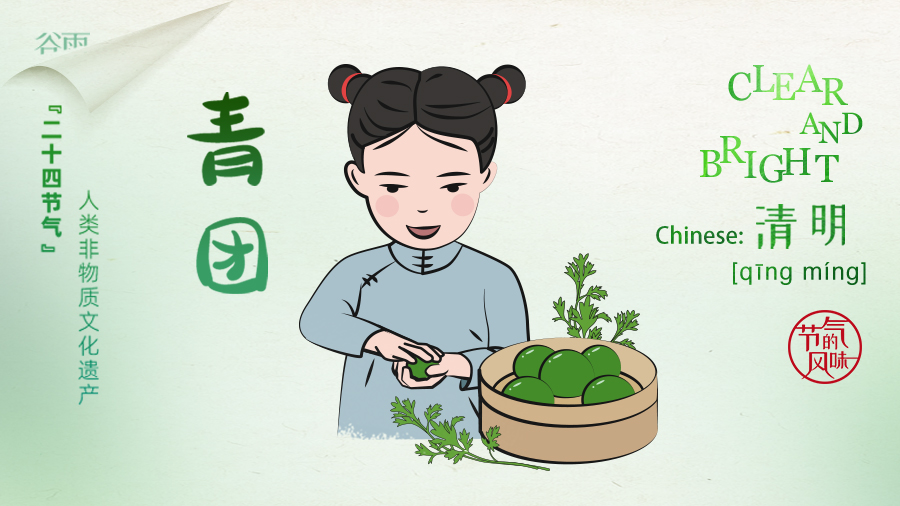
In regions like the lower reaches of the Yangtze River, qingtuan, or green cakes, are a traditional snack during this period. Made from barnyard grass juice and flour filled with sweet black bean paste, these cakes are steamed to create a delectable, vibrant green treat. Qingtuan are also used as offerings during tomb-sweeping activities, symbolizing the freshness of spring. Article reference1. Chinese paintings portray Qingming Festival. chinadaily.com.cn. 20242. 24 Solar Terms: 8 things you may not know about Clear and Bright. chinadaily.com.cn. 20243. A time for new beginnings and old memories. chinadaily.com.cn. 20224. Culture Insider: Qingming Festival marked in Chinese paintings. chinadaily.com.cn. 20215. Qingming Festival marked in Chinese paintings. chinadaily.com.cn. 2018Photo Gallery(17 pictures)CategoriesLifestyleTag24 Solar TermsRelatedThe Twenty-Four Solar TermsTraditional Chinese Calendar24 Solar TermsTomb-Sweeping DayCatalogue1. Overview2. Cultural Significance and Traditions3. Health Practices- - - []








